PI 5 · HAILO-8 · NOAA SDR · NEMOTRON
A home safety box built in 24 hours at HackUTD 2026: a Pi 5 with a Hailo AI HAT+ asks “Are you okay?” after an earthquake or emergency alert, and raises an alarm if nobody answers.
- EVENT
- HackUTD 2026 · 24 h
- TEAM
- Rafael Amador · Godfrey Ponce
- MY ROLE
- Hardware · embedded · Pi bring-up
- STACK
- Pi 5 · Hailo-8 · RTL-SDR · Nemotron
LAND is a home safety box built in 24 hours at HackUTD 2026 with Godfrey Ponce. After an earthquake, an emergency alert, or when someone stops moving, the box asks out loud “Are you okay?” If the person asks for help, or doesn’t answer three times while someone is in the room, it raises an alarm. Across a whole city, a dashboard ranks the affected homes so responders reach the right people first.
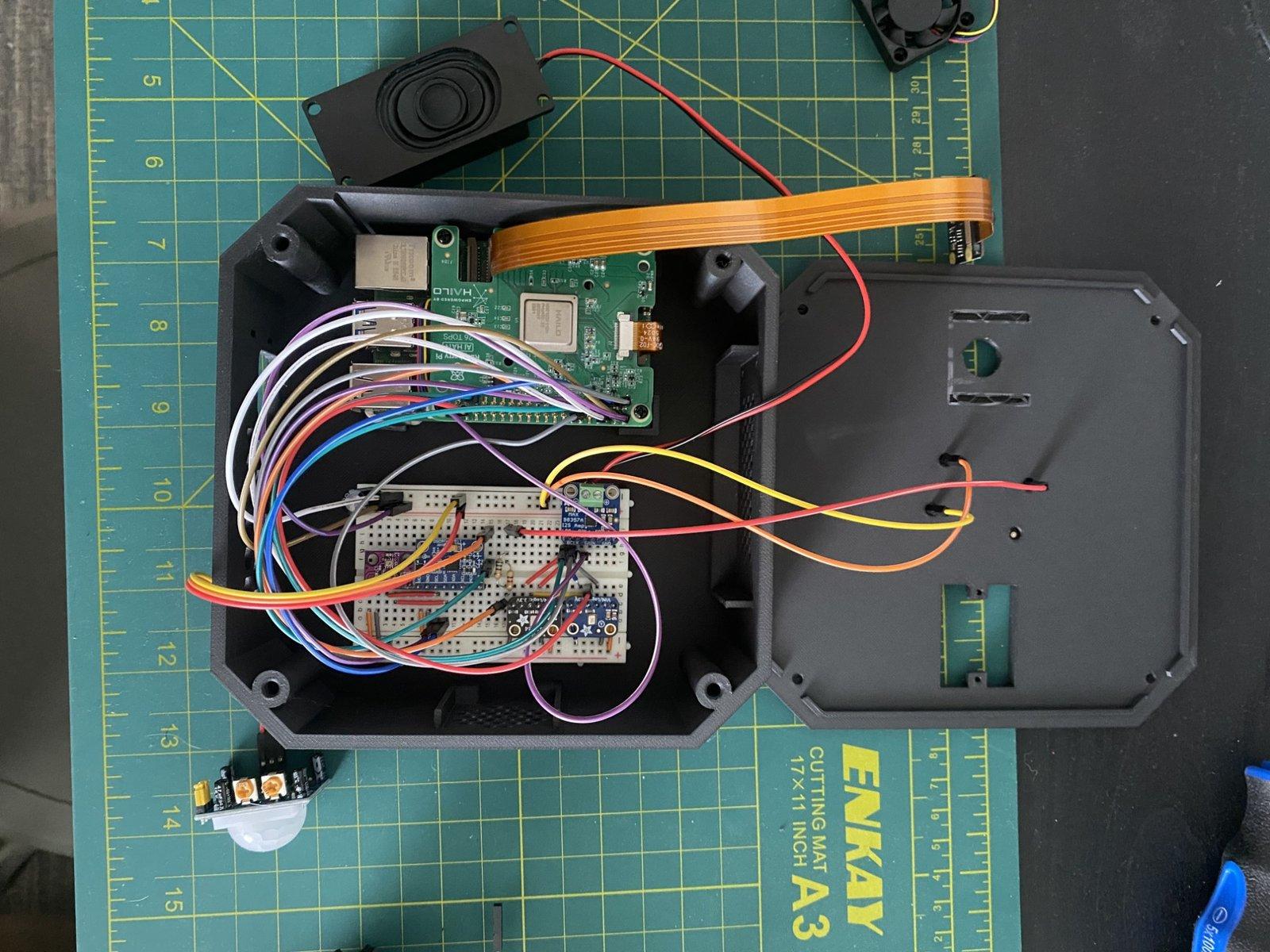
The motivation was the 2021 Texas winter storm: 246 deaths, 158 of them from hypothermia. A siren tells people a disaster is coming; nothing tells anyone that a specific person inside a specific house has stopped answering. Godfrey owned the software and the agent; I owned the hardware: the box, the sensors and wiring, the radio receiver, and bringing the whole system up on the Pi.
Everything that has to keep working when the internet doesn’t lives in one enclosure on a Raspberry Pi 5. Person and posture detection runs on the Hailo-8 of the AI HAT+ (YOLOv8s-pose, about 30 fps), so the camera can tell standing from lying down without sending video anywhere.
| PART | JOB IN THE BOX |
|---|---|
| Pi 5 + AI HAT+ (Hailo-8) | Runs every service; pose detection on the NPU |
| Camera Module 3 (NoIR) | Sees whether someone is there, and whether they are down |
| MPU-6050 accelerometer | Feels the shaking; the check-in starts when it stops |
| RTL-SDR + dipole | Receives NOAA Weather Radio and decodes SAME emergency alerts |
| Mic + speaker amp | The voice check-in, with echo cancellation and noise suppression |
| NeoPixel ring | Shows shaking strength at a glance (16 LEDs = 1.2 g) |
The voice check-in is an agent built on NVIDIA Nemotron, but the alarm is never the model’s call. The rule lives in plain code: alarm only if someone is detected and they ask for help or don’t answer three times. Nemotron Safety Guard screens the transcripts, and the agent can only choose from approved responses. Across the rehearsal set the rule made the right call 80 times out of 80.
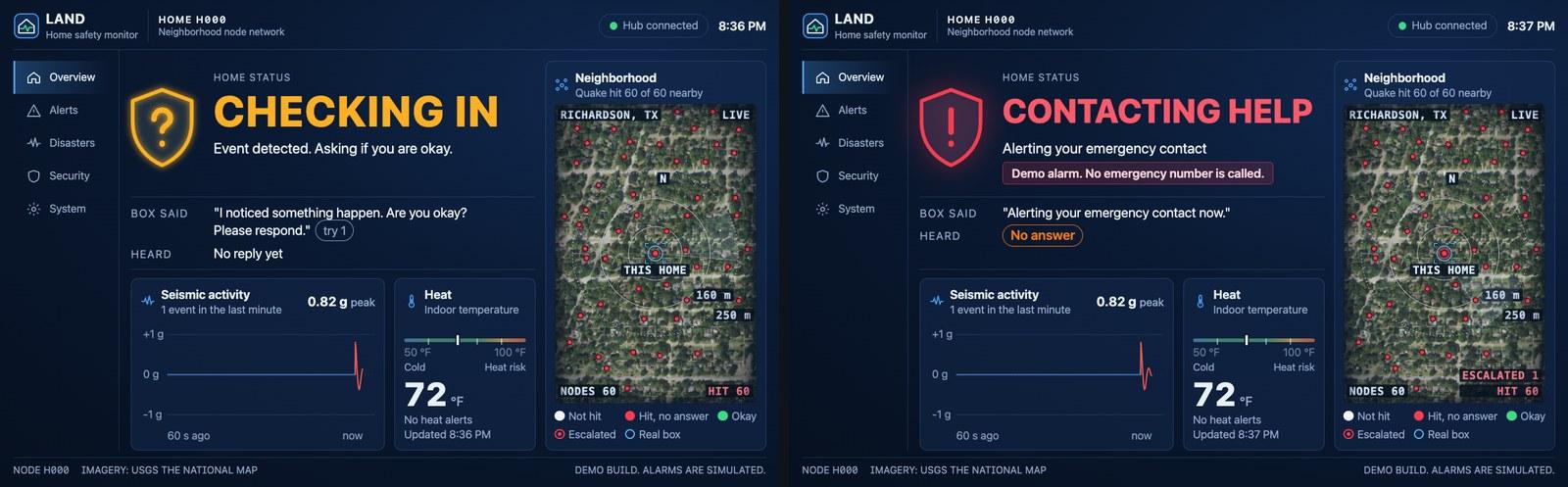
It also had to work with the internet cut. After three missed connectivity checks the agent, voice and Q&A move onto the Pi: a local LLM (Qwen3 1.7B through Ollama, since the Pi has 4 GB of RAM) with on-device speech, and a fixed script behind that. Offline answers take about 6 s, slower than the cloud, but the box keeps talking.
One real box, plus 499 simulated homes to show the city scale. The dashboard maps the shaking strength, ranks every affected home by estimated time to harm and whether help was asked for, and writes a short hand-off note for the people who will knock on the door.
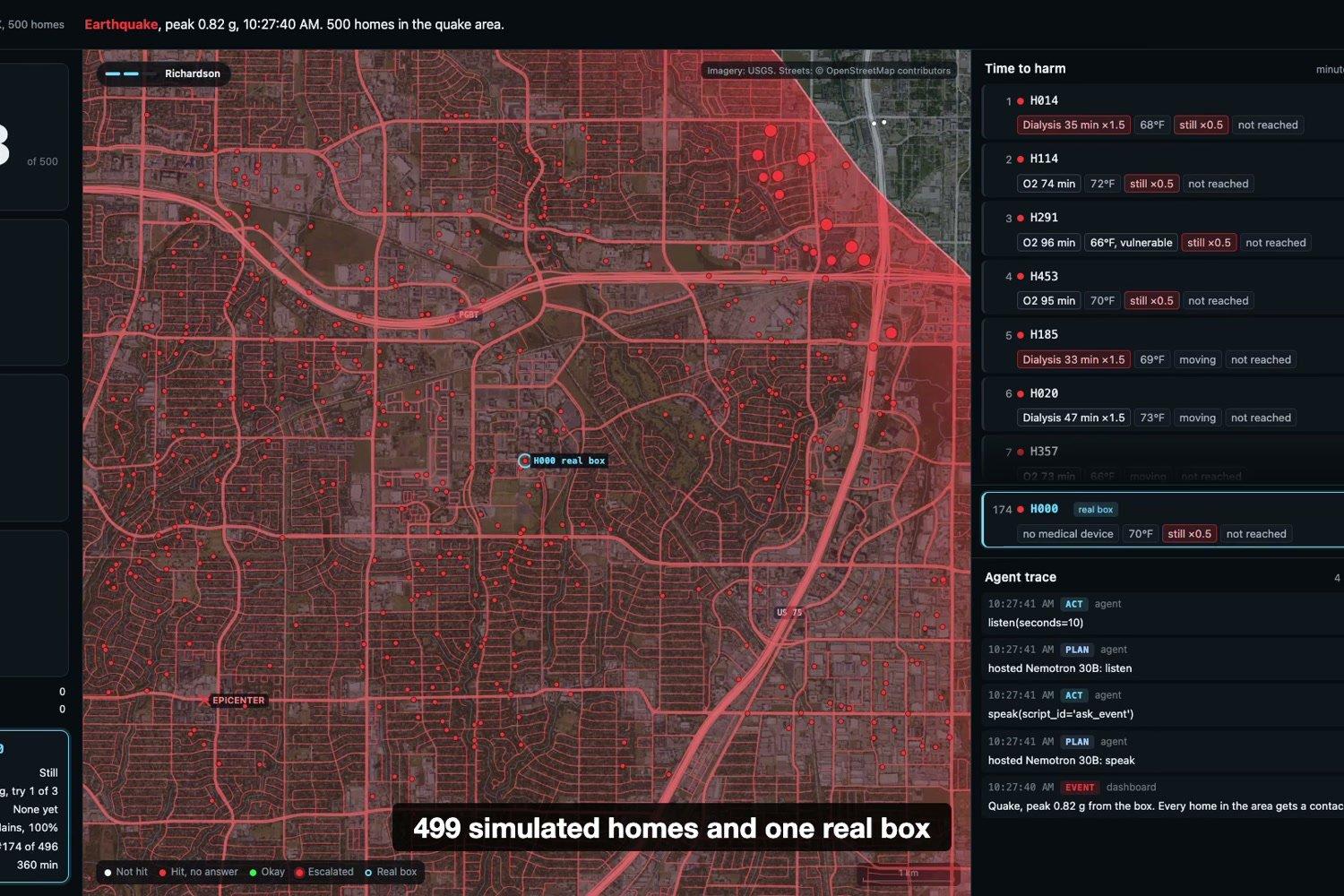
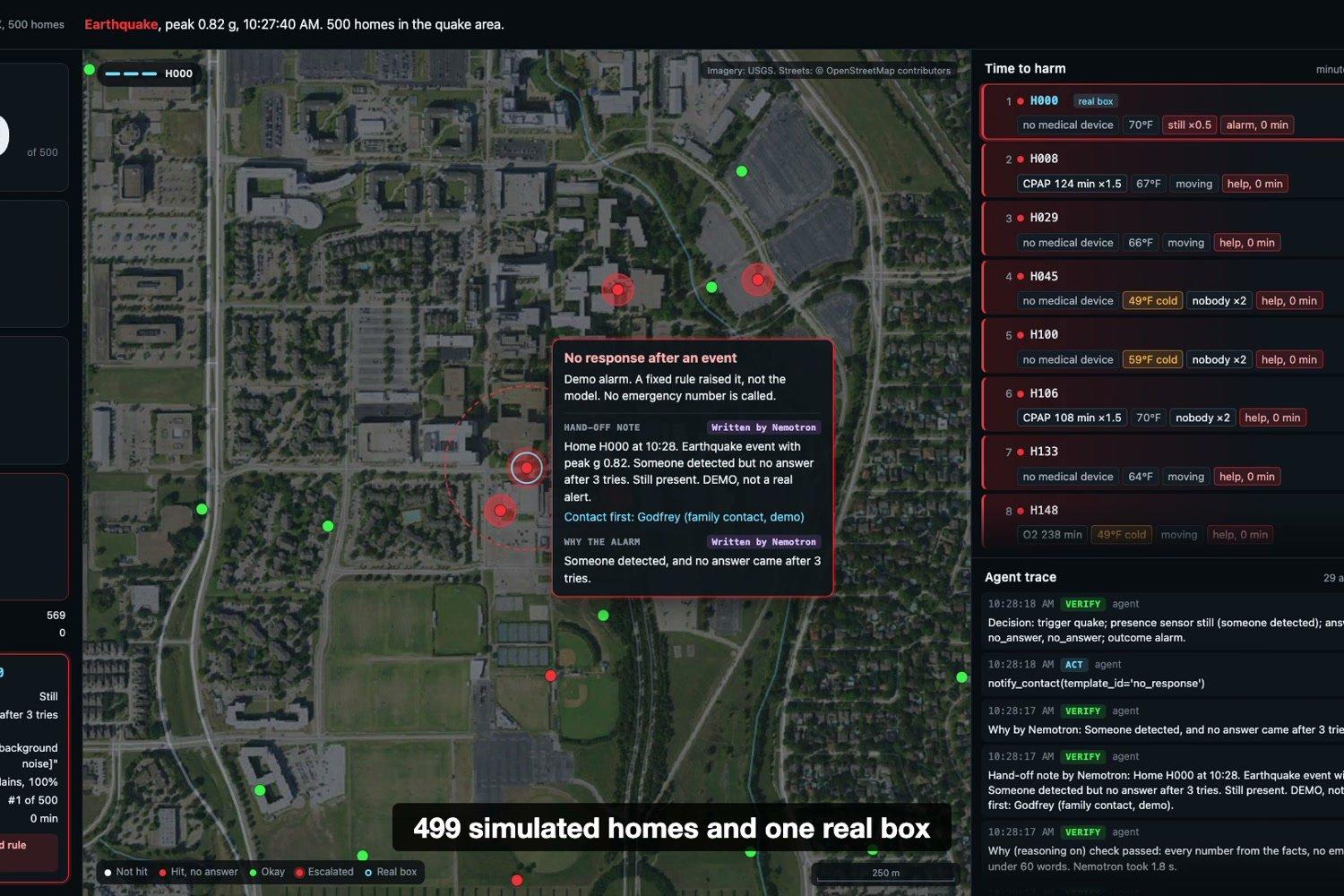
LAND didn’t place; 386 projects were submitted and 54 won prizes. Going back through the winners afterwards, the pattern was clear: they answered one sponsor’s brief literally, put measured numbers in the write-up, and let a judge trigger the key moment at the table in under a minute. LAND tried to cover two briefs at once, and its best moment (shake the box, lie on the floor, wait for the alarm) took several minutes to show.
The engineering lessons hold either way: keep safety decisions in code the model can’t override, plan for the network to fail, and measure the hardware (the antenna) instead of assuming it works. What’s next on the list is battery backup, LoRa between homes for when cell networks are down, and smoke, CO and water sensors.