TI SK-AM62B · ONNX · QWEN2.5-0.5B
Speak Up
An offline speech screening aid for school speech therapists, on a TI SK-AM62B board. A small on-board model judges each /r/ sound and the therapist checks every call. 1st place, Track 3, UTD HackEdge 2026.
- EVENT
- UTD HackEdge 2026 · Track 3
- RESULT
- 1st place · Track 3
- MY ROLE
- Hardware · board bring-up · model experiments
- STACK
- SK-AM62B · ONNX Runtime · llama.cpp
Speak Up is an offline speech screening aid for school speech-language pathologists (SLPs). A child says short words with the /r/ sound, a small model on the board (Arti) judges each r, and the SLP agrees or disagrees with every call. At the end the SLP gets a tally and a short note written by a language model on the same board.
There is no network and no cloud, and no audio leaves the board. It screens and never diagnoses: the SLP makes every decision. It runs on a Texas Instruments SK-AM62B: four Cortex-A53 cores, 2 GB of RAM and no AI accelerator.
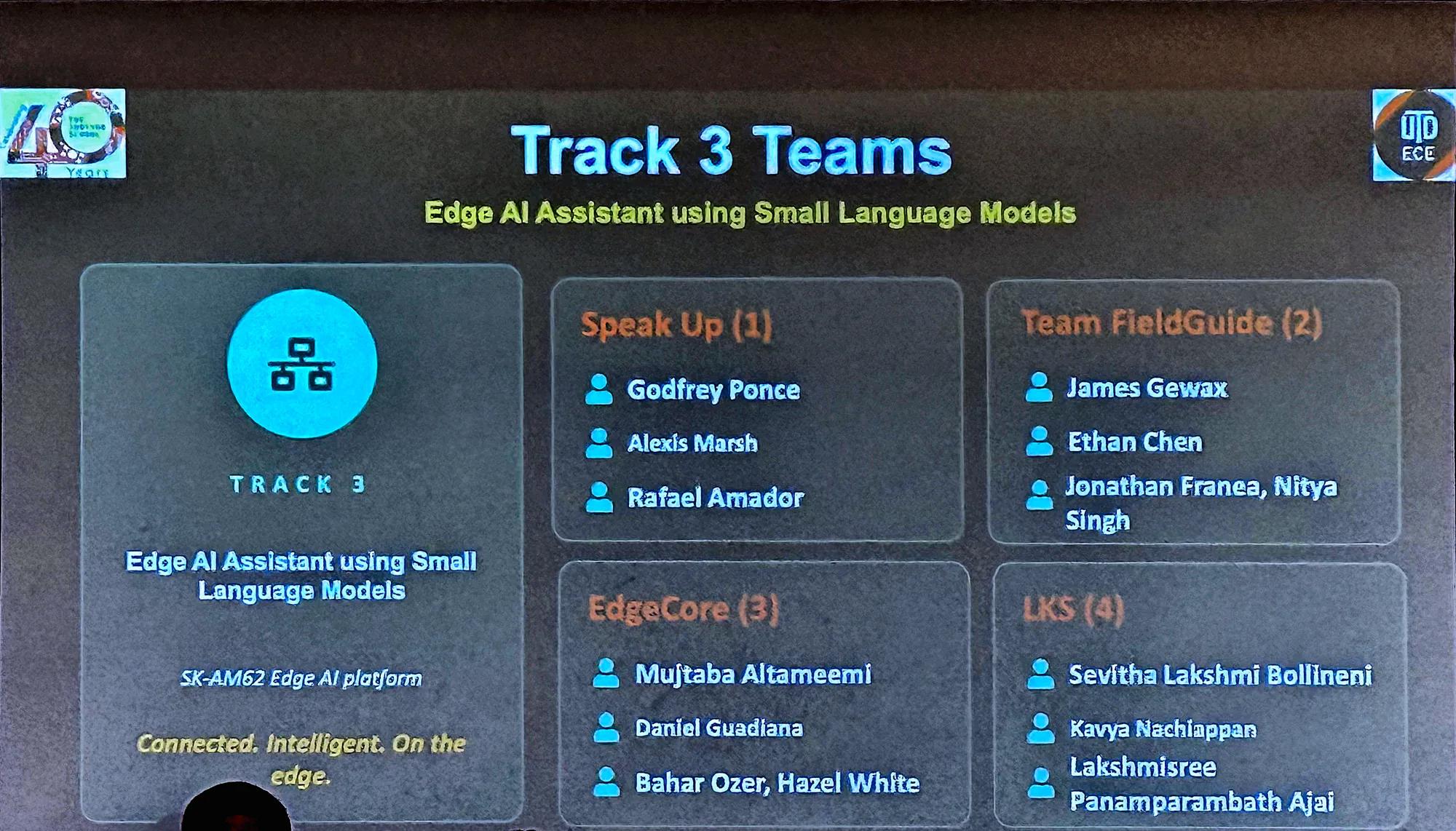
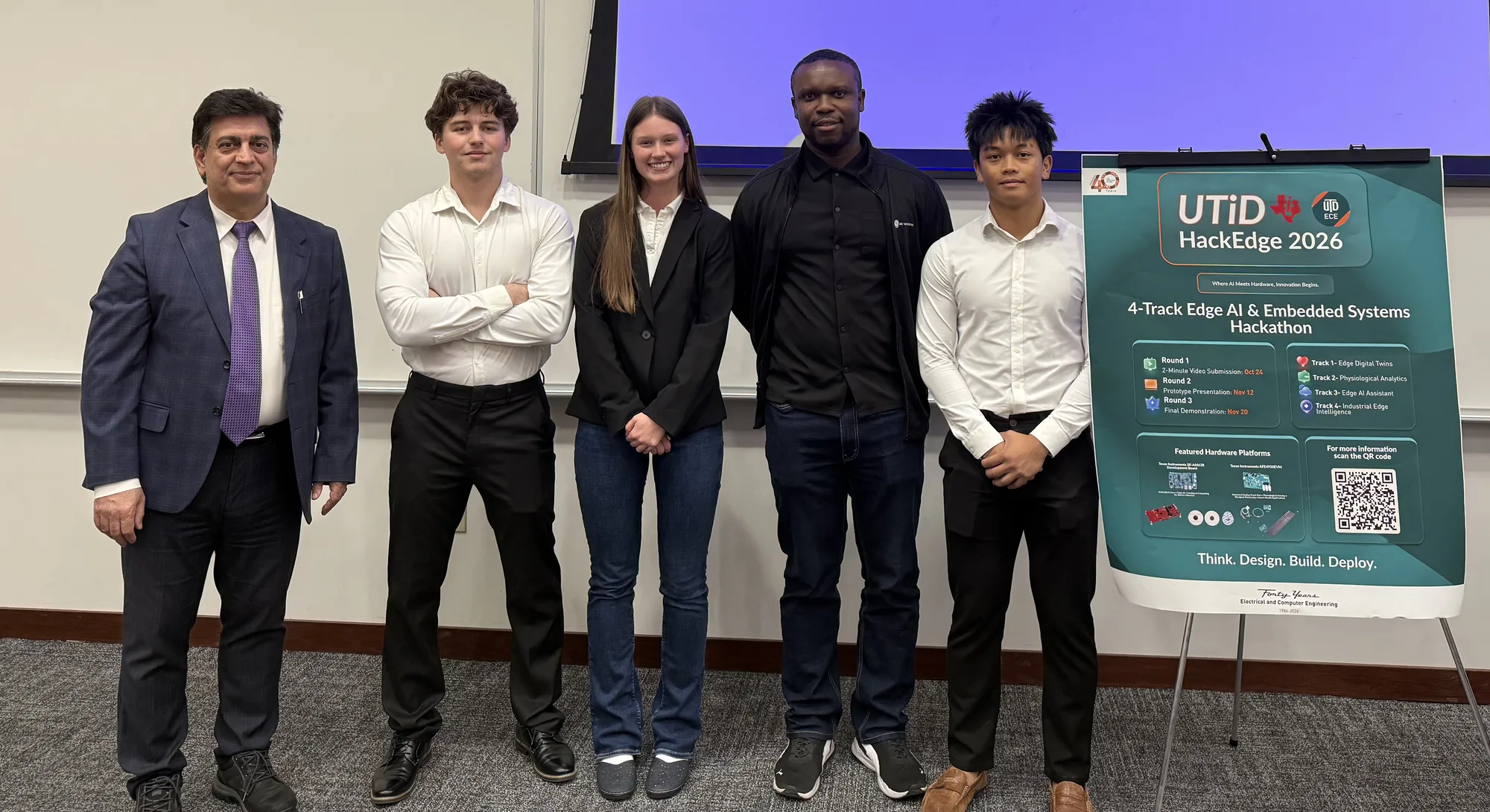
We built it for UTD HackEdge 2026 (UT Dallas ECE and Texas Instruments), Track 3: Edge AI Assistant, over three rounds from October to the final on November 20, where it took 1st place in Track 3. Godfrey Ponce built the app, the language-model features and the practice coach. Alexis Marsh (Speech, Language and Hearing Science) did the clinical design, the word list and the wording the SLP sees. I did the hardware: the board, the microphone and the setup, plus the model experiments.
The child sees one word at a time on the HDMI screen: the word, its picture, a microphone and a buddy who says “Your turn!” The ten words are rabbit, rain, ring, rocket, truck, carrot, very, car, door and bear, with the r at the start, middle and end.

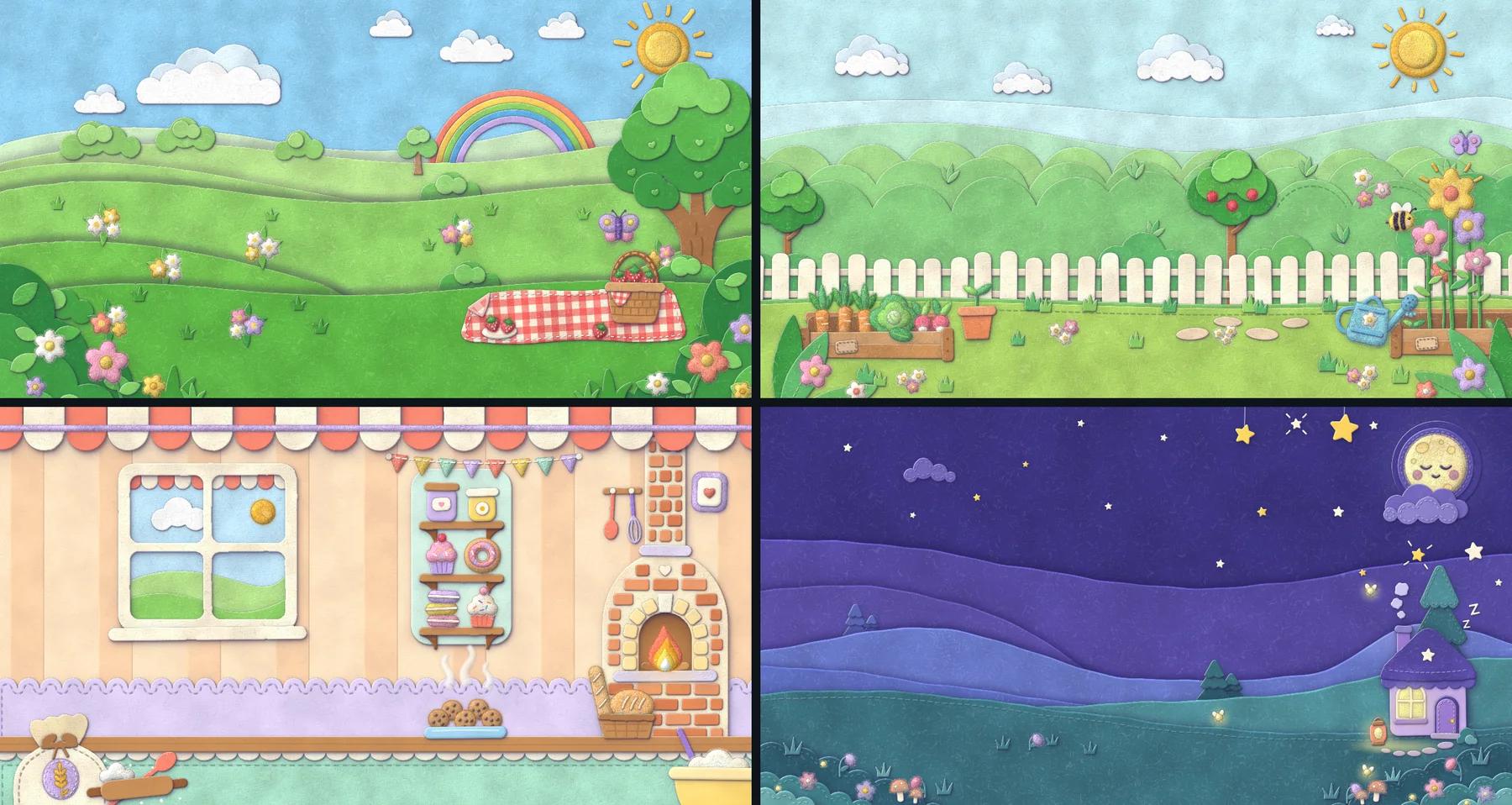
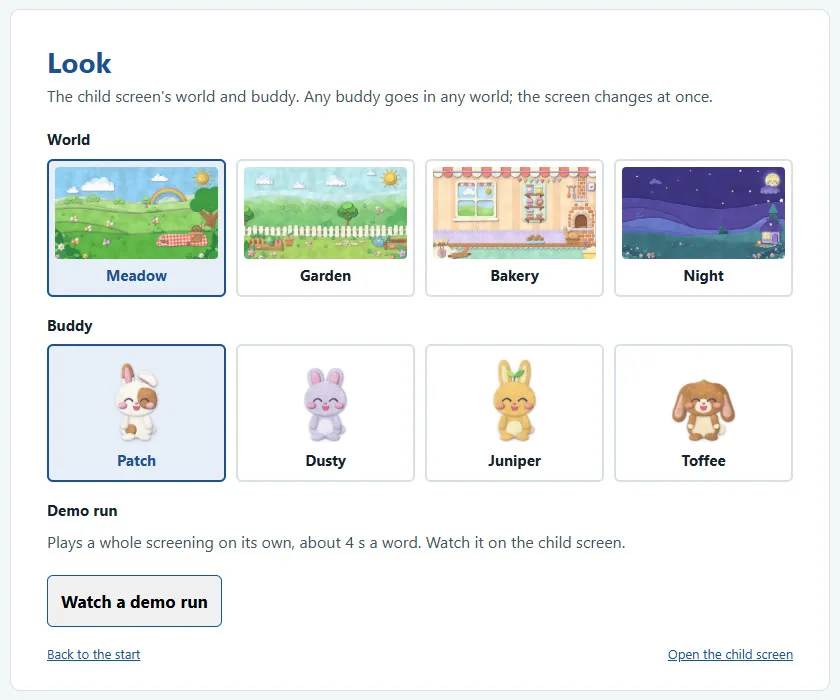
Before a session the child picks one of four worlds and a buddy: Patch in the meadow, Dusty at night, Juniper in the garden and Toffee in the bakery. The board’s GPU is weak, so the scenes are pre-rendered felt-and-paper layers that CSS moves, not live 3D.

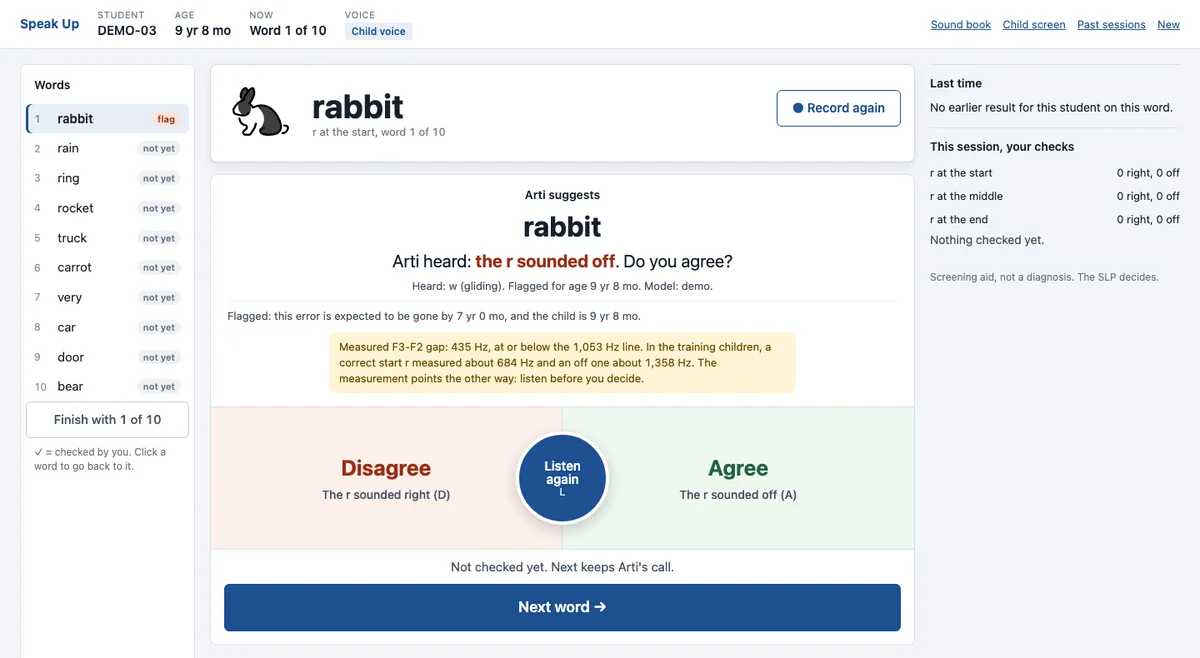
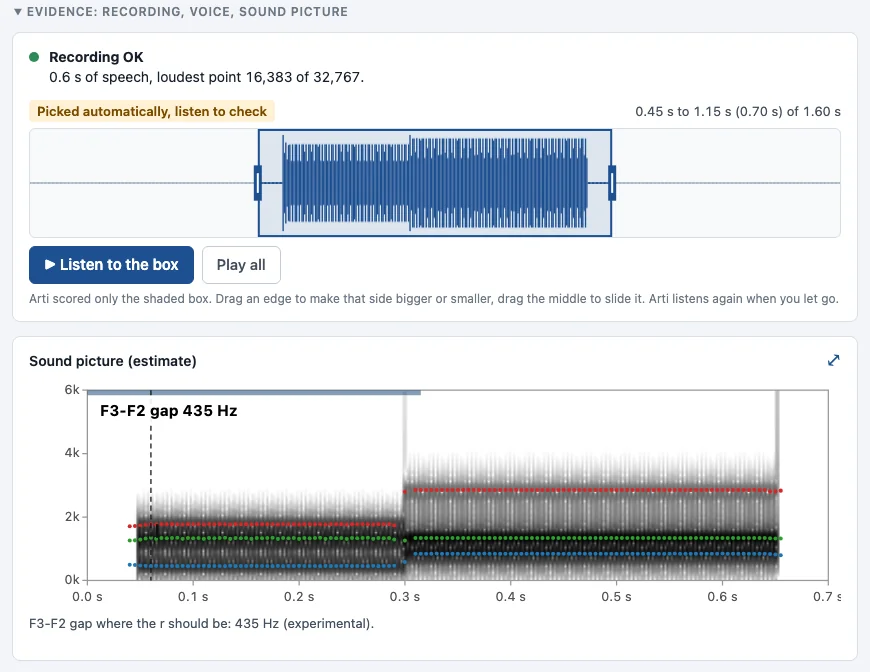
The SLP watches on a laptop connected to the board by one Ethernet cable. After each word they see Arti’s call, the measured F3-F2 gap next to the line from the training children, and three buttons: Agree, Disagree and Listen again.
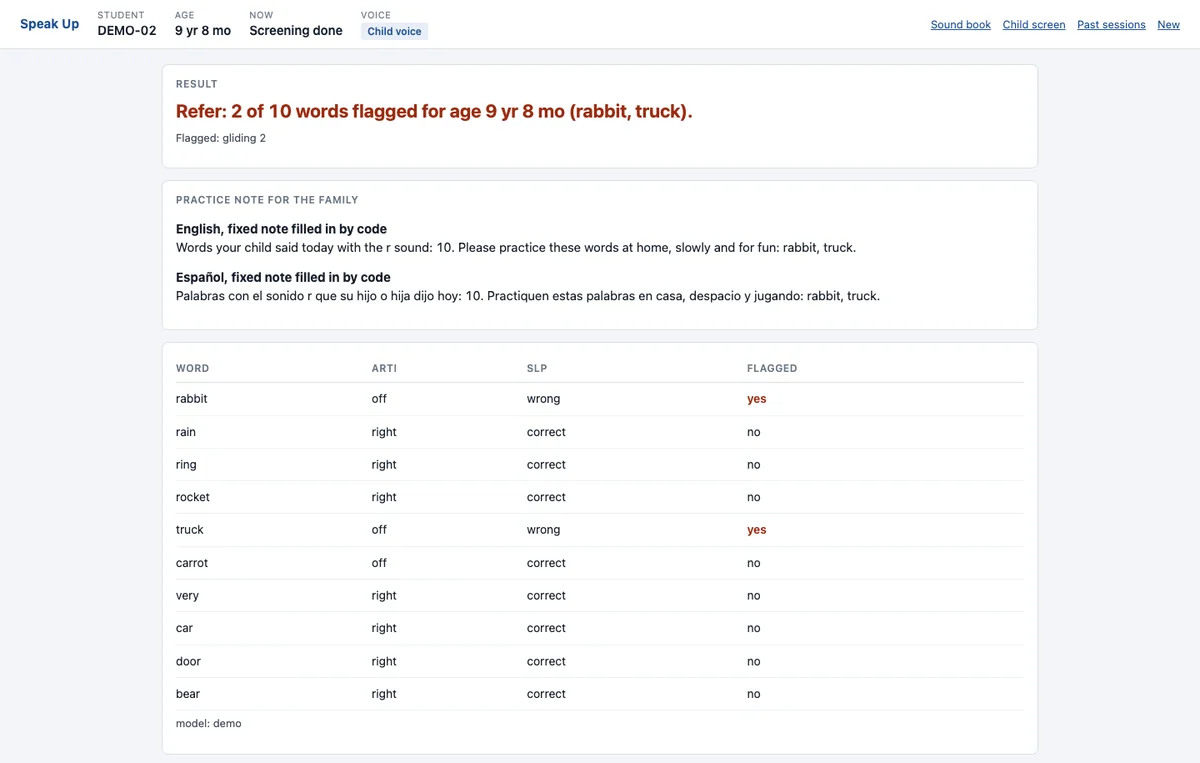
The end screen shows the tally, a fixed family note in English and Spanish, and Arti’s call next to the SLP’s for every word. The language model, Qwen2.5-0.5B-Instruct in 4 bits on llama.cpp, only manages 4.6 tokens per second on the board. So the app builds the note from approved sentences, and code checks every number in it before the SLP sees it.
Arti is a small BC-ResNet trained on the PERCEPT-R corpus of children’s /r/ sounds, with soft labels for clips the listeners disagreed on. It is tested on 300 clips from 55 children it never saw in training.
| JUDGE | AGREES WITH TRAINED LISTENERS |
|---|---|
| Arti v2 (shipped) | 268 of 300 (89%) |
| Arti v0 | 258 of 300 |
| F3-F2 gap alone | 214 of 300 |
| MEASURE | ARTI V2 |
|---|---|
| Size | 1.27 MB · about 81,000 parameters |
| Time on the board | 46.5 ms per clip, one thread |
| Memory on the board | 72 MB |
| Spearman with listener share | 0.624 (v0: 0.593) |
| Calibration error, Platt scaling | 0.107 → 0.026 |
Arti is not public. TalkBank, which distributes PERCEPT-R, asked us on November 13 not to share models trained on its data, so the app also runs in a demo mode without it.
My part was getting the board to do all of this alone. I brought up the SK-AM62B from a blank microSD card on TI’s Linux SDK, set up the USB microphone, the HDMI screen for the child and the single Ethernet link to the SLP’s laptop. The whole setup, from flashing the card to the known issues, is written up in the repo’s board guide.
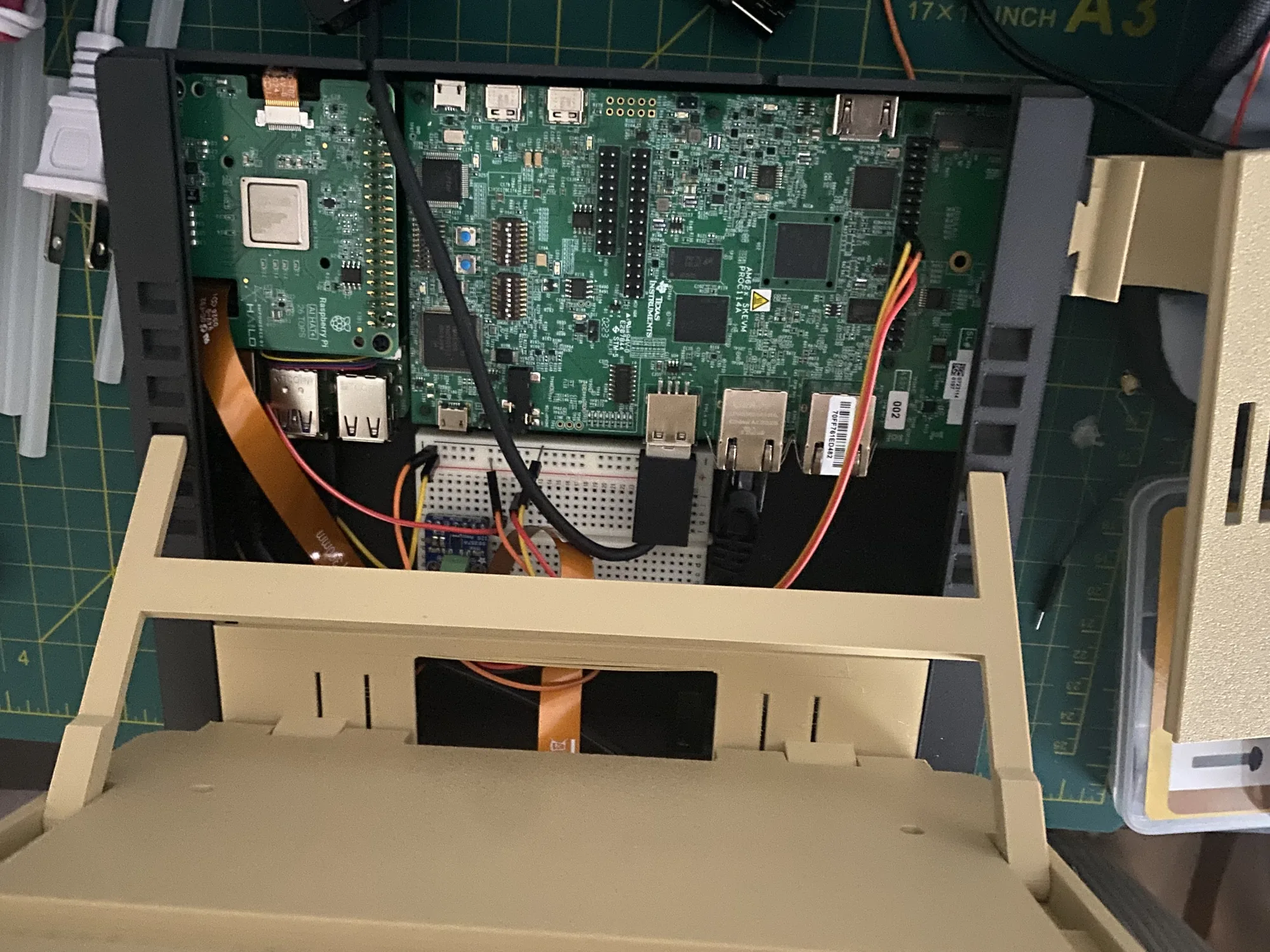
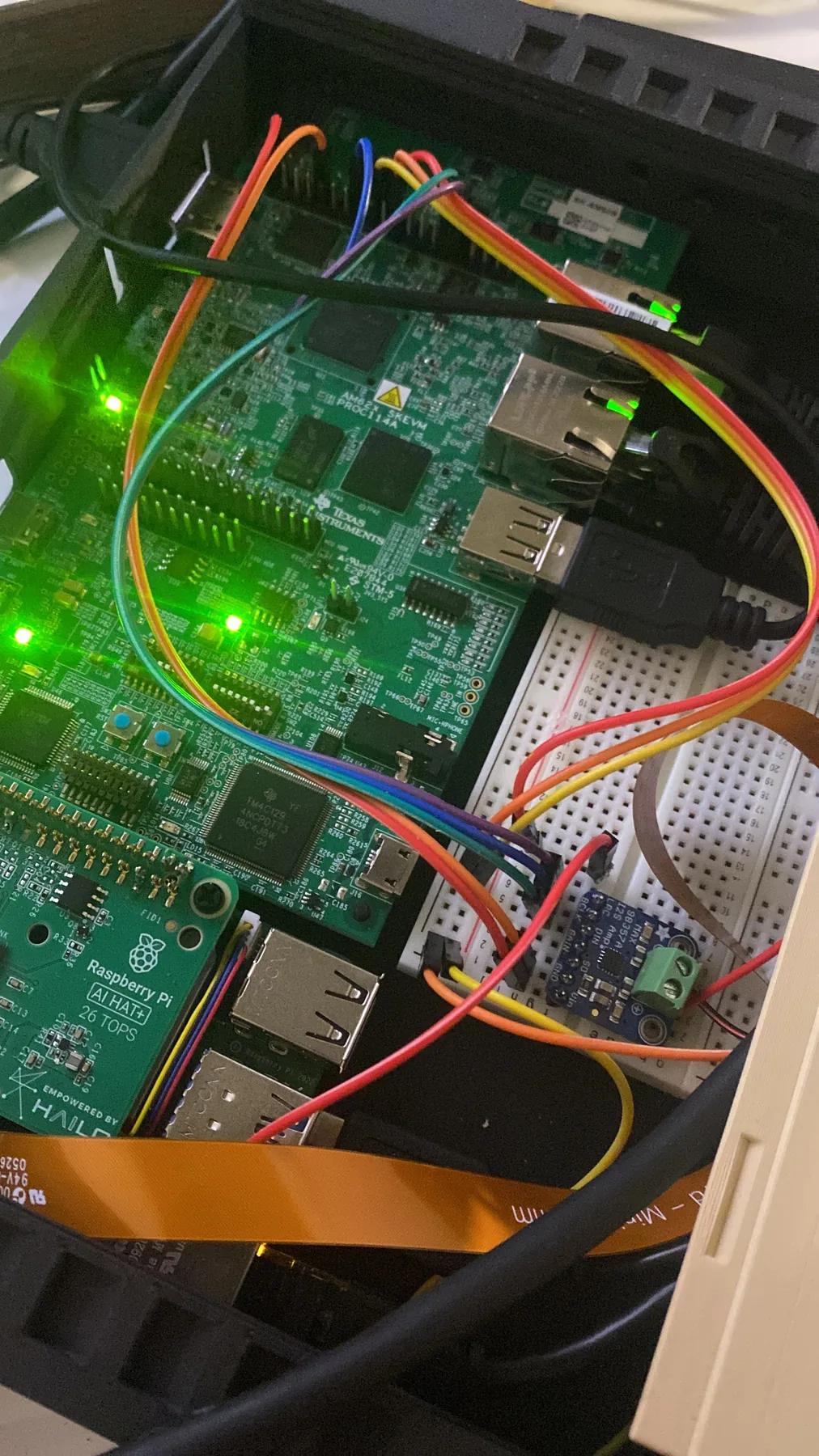
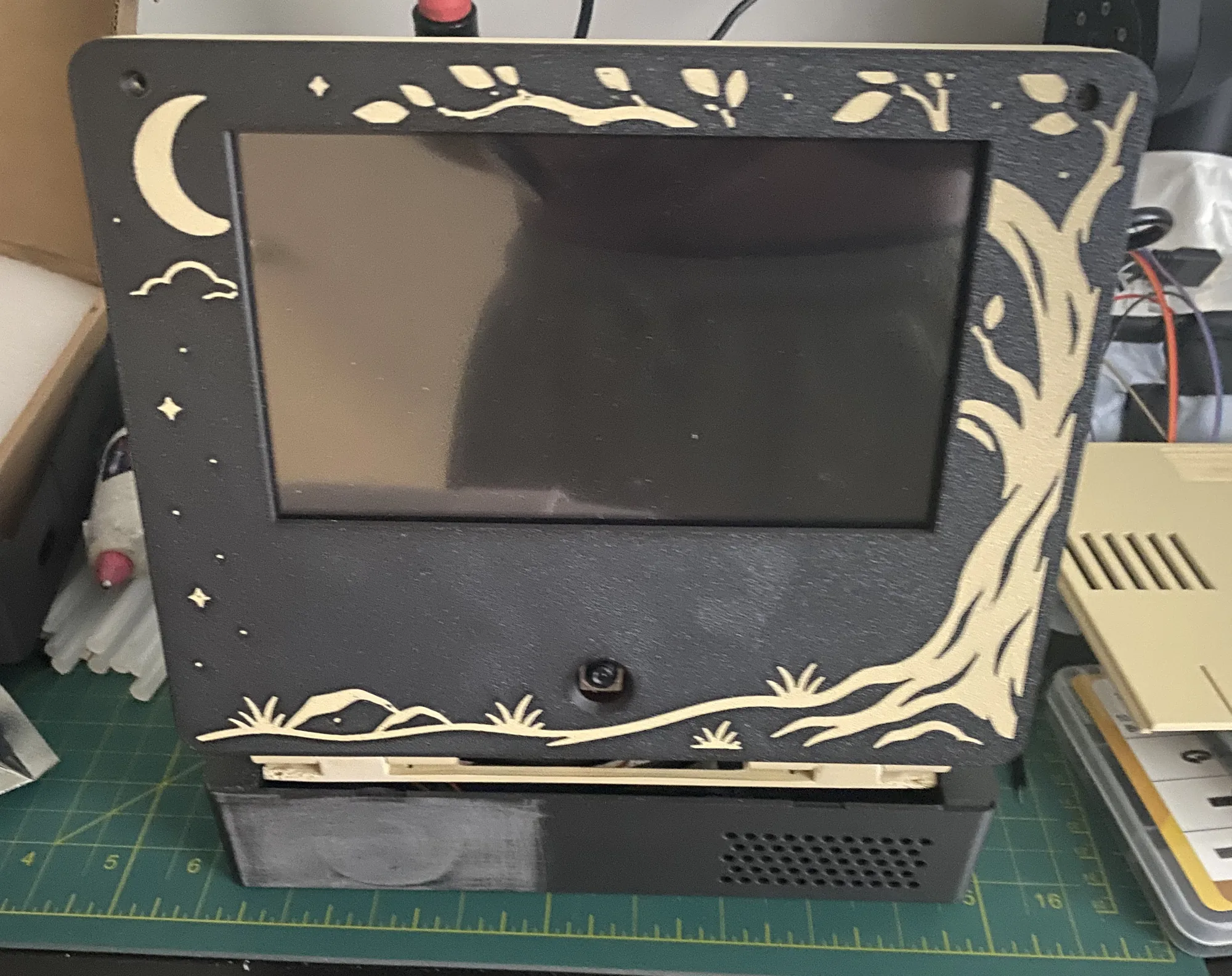
The first case was a snap-fit shell for the board alone (89.8 × 158.3 × 31.0 mm), drawn from TI’s own CAD. For the final round I designed case v2: one table-top unit that holds the board, a Raspberry Pi 5, a 7″ screen for the child, a camera and a speaker.
Arti misses errors on adult voices, because it only ever heard children: every training clip came from a speaker 12 or younger. It is a known gap, not fixed yet.
None of this is built yet. It is the plan we are working toward.
| STEP | WHAT IT MEANS |
|---|---|
| Camera tie-breaker | A Pi 5 with a Hailo accelerator reads lip and jaw landmarks, numbers only, never frames. When it disagrees with Arti, the clip is flagged for the SLP. |
| One board | A TI AM62A (about 2 TOPS) replaces the two boards in the case. |
| More sounds | S and Z including lisps, then L, TH, SH, CH and J, K and G, and F and V. |
| Shareable data | Retrain on open datasets (JIBO Kids, Speechocean762). We have emailed 15 researchers. Our own recordings only after IRB approval. |
| More modes | A 5 to 10 minute screening, home practice, per-child plans and accent calibration. |
Long term: approval from bodies like the FDA, then selling it to public schools.